Optimizing Pipeline Integrity: A Practical Guide to Stress Reversal Analysis (SRA)
Stress Reversal Analysis (SRA) is a critical technique for assessing the fatigue life of pipelines, particularly those subjected to cyclic loading. This article provides a practical overview of SRA, its applications, and how operators can effectively integrate it into their integrity management programs.

Pipeline integrity management is a multifaceted discipline aimed at ensuring the safe, reliable, and efficient operation of pipeline assets. A significant aspect of this is understanding and mitigating fatigue damage, especially in pipelines that experience dynamic or cyclic loading conditions. Stress Reversal Analysis (SRA) is a powerful engineering tool that allows operators to quantify and predict the accumulation of fatigue damage, thereby optimizing inspection intervals, rehabilitation strategies, and overall operational planning.
Understanding Stress Reversal Analysis (SRA)
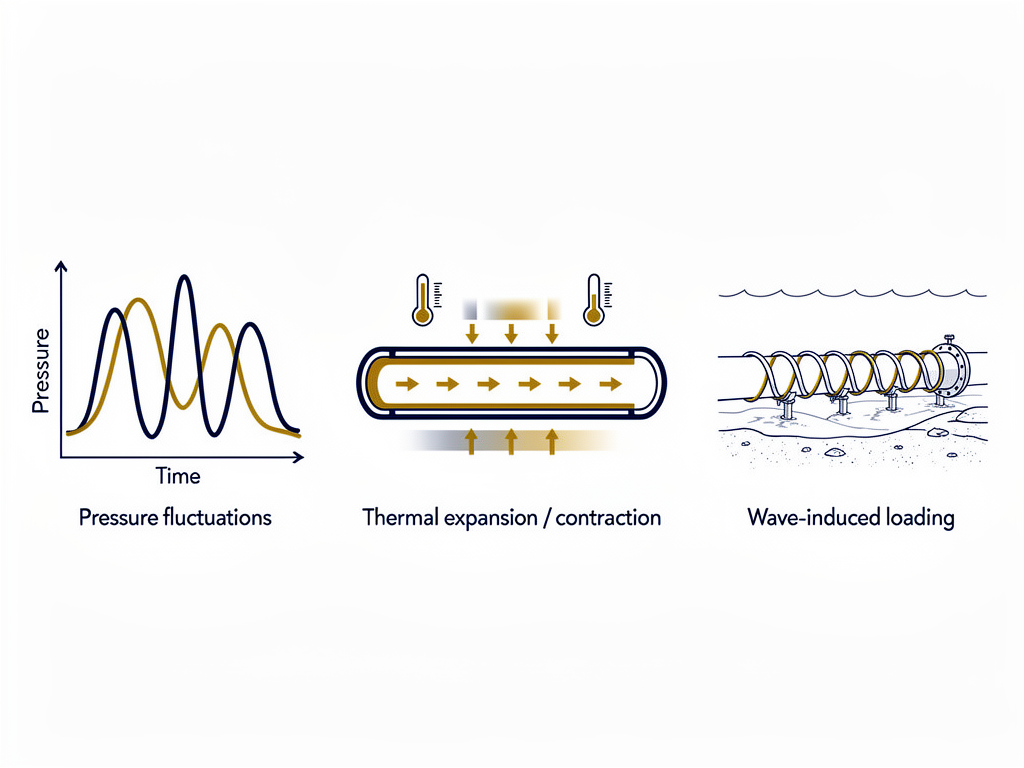
SRA fundamentally involves identifying and characterizing stress cycles within a pipeline system. Unlike static stress analysis, which focuses on peak stresses under a single load condition, SRA considers the repeated application and reversal of stresses over time. These cyclic stresses can arise from various sources, including:
- Pressure Fluctuations: Start-up/shutdown cycles, transient operations (e.g., pigging, valve closures), and variations in flow rates.
- Temperature Variations: Daily or seasonal temperature changes, transient heating/cooling during operations.
- Environmental Loading: Wave action, seismic activity, soil movement, and wind-induced vibrations.
- Operational Stresses: Compressor/pump vibrations, slug flow, and vortex-induced vibrations (VIV) in offshore pipelines.
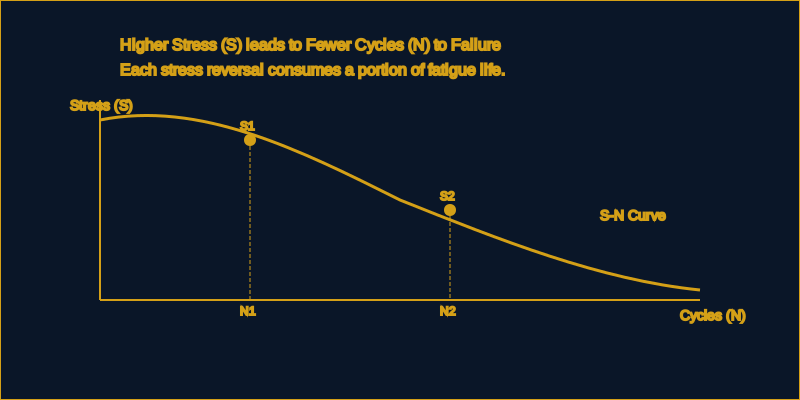
Each stress cycle, particularly those involving a significant reversal from tension to compression or vice versa, contributes to the initiation and propagation of fatigue cracks. SRA quantifies this contribution using established fatigue theories (e.g., Miner's rule) and material-specific S-N curves (stress-number of cycles to failure).
Key Components of SRA
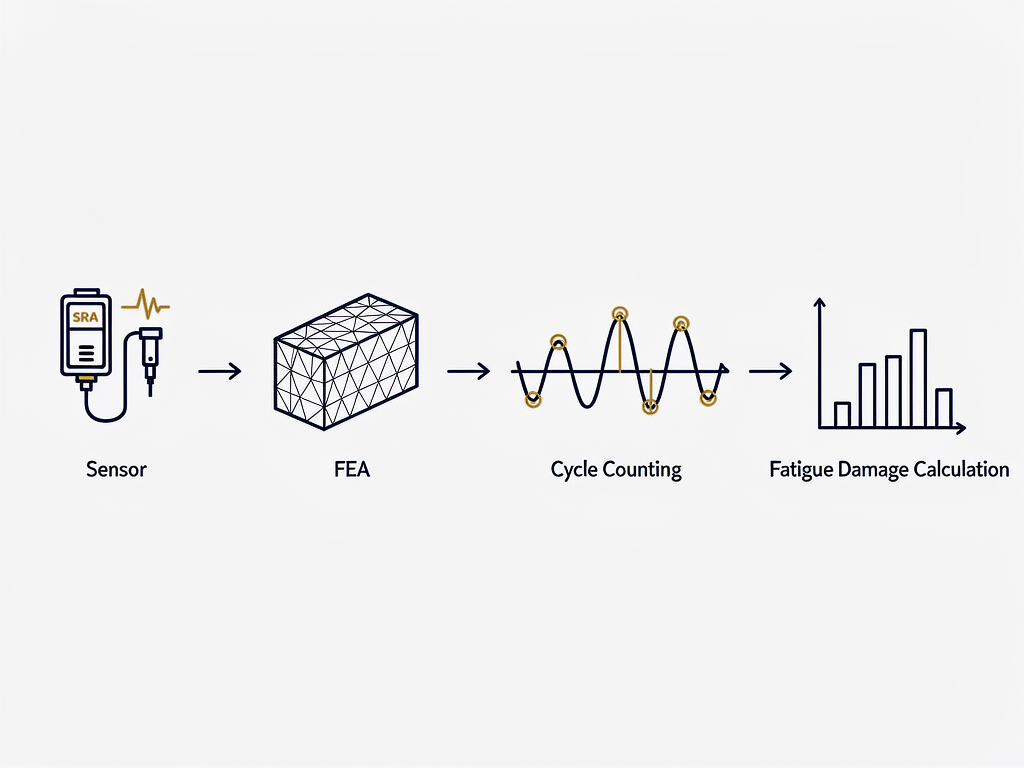
- Stress History Acquisition: This is arguably the most crucial step. It involves collecting accurate data on operational parameters (pressure, temperature, flow rates) and environmental conditions over a representative period. High-frequency data acquisition is often necessary, especially for transient events.
- Finite Element Analysis (FEA): A detailed FEA model of the pipeline system, or critical sections, is developed to translate operational loads and environmental conditions into localized stress states. This model must accurately represent geometry, material properties, and boundary conditions.
- Cycle Counting Algorithms: Algorithms like Rainflow counting are employed to extract individual stress cycles from the complex, time-varying stress histories. Rainflow counting is particularly effective as it accounts for the sequence and magnitude of stress reversals, which are critical for fatigue damage assessment.
- Fatigue Damage Accumulation: Using the identified stress cycles and material fatigue properties (S-N curves), the cumulative fatigue damage is calculated. This often involves applying a fatigue damage accumulation rule, such as Miner's rule, which sums up the damage fraction from each cycle.
- Remaining Life Prediction: Based on the accumulated damage, the remaining fatigue life of the pipeline or its components can be predicted. This prediction informs future inspection intervals and potential remediation actions.
Practical Applications for Pipeline Operators
SRA is not merely an academic exercise; it offers tangible benefits for pipeline operators in managing their assets.
Optimizing Inspection and Maintenance Schedules
By understanding the fatigue damage accumulation rates, operators can transition from time-based or prescriptive inspection schedules to risk-based, condition-based approaches. This means focusing inspection resources on areas most susceptible to fatigue, potentially extending inspection intervals in low-risk zones and intensifying them in high-risk areas. For example, knowing that a specific section experiences high-frequency pressure cycles due to a downstream control valve can trigger more frequent ultrasonic testing or magnetic flux leakage (MFL) inspections in that vicinity.
Assessing Fitness-for-Service (FFS)
When anomalies like cracks or crack-like defects are detected, SRA can be integrated into a Level 3 FFS assessment (per API 579/ASME FFS-1). It helps determine if the pipeline can continue to operate safely for a defined period, given the existing defect and anticipated future cyclic loading. This can prevent unnecessary and costly repairs or shutdowns.
Evaluating Design Changes and Operational Modifications
Before implementing operational changes (e.g., increased flow rates, changes in operating pressure envelopes, new pigging regimes) or making design modifications, SRA can predict their impact on fatigue life. This proactive assessment helps avoid inadvertently accelerating fatigue damage and ensures that changes are implemented safely and sustainably.
Root Cause Analysis of Failures
In the unfortunate event of a fatigue-related failure, SRA can be a powerful tool in root cause analysis. By reviewing historical operational data and applying SRA principles, engineers can identify the specific loading conditions and stress cycles that contributed to the failure, informing corrective actions and preventing recurrence.
Integrating SRA into Integrity Management Systems
For SRA to be truly effective, it must be seamlessly integrated into an operator's existing integrity management system (IMS). This involves several key considerations:
- Data Management: Establish robust systems for collecting, storing, and analyzing operational and environmental data. This includes pressure, temperature, flow, and potentially accelerometry data for vibration analysis. Data quality and consistency are paramount.
- Competency Development: Ensure that engineering teams possess the necessary skills in FEA, fatigue analysis, and SRA methodologies. External expertise from specialized consultants can be invaluable for complex cases or initial implementations.
- Software Tools: Invest in appropriate engineering software for FEA, fatigue analysis, and data processing. Commercial tools offer sophisticated capabilities for rainflow counting and damage accumulation.
- Regular Review and Updates: SRA models and predictions should not be static. They must be regularly reviewed and updated with new operational data, inspection findings, and any changes in material properties or environmental conditions. This iterative process ensures the SRA remains relevant and accurate.
Challenges and Considerations
While SRA offers significant benefits, operators should be aware of potential challenges:
- Data Availability and Quality: The accuracy of SRA heavily depends on the quality and completeness of input data. Gaps or inaccuracies can lead to unreliable predictions.
- Material Properties: Accurate S-N curves for pipeline steels, especially for older assets, can be challenging to obtain. Material variability and welding effects must also be considered.
- Model Complexity: Developing detailed FEA models for large or complex pipeline systems can be resource-intensive.
- Uncertainty Management: Fatigue analysis inherently involves uncertainties. Operators should employ probabilistic SRA approaches or apply appropriate safety factors to account for these uncertainties.
Conclusion
Stress Reversal Analysis is an indispensable tool for modern pipeline integrity management. By providing a detailed understanding of fatigue damage mechanisms, SRA empowers operators to make informed decisions regarding inspection strategies, operational modifications, and overall asset life extension. Its effective implementation requires a commitment to data quality, engineering expertise, and continuous integration into existing integrity management frameworks. Embracing SRA helps ensure the long-term safety, reliability, and economic viability of critical pipeline infrastructure.
Conceptual Diagram of Stress Reversal and Fatigue Life
Need support with this topic?
Nonlinear Engineering provides specialist consulting on pipeline integrity, pigging, flow assurance and operations.
Request a consultation →